
Some links on this page are affiliate links. If you sign up through one, TradeStackLab earns a commission at no extra cost to you. We only recommend tools we’d actually use on a job, and a commission never buys a better review.
The idea that you need a four-year degree to earn good money is mostly fiction at this point. A lot of tradespeople are clearing six figures — some well past it — without ever stepping foot in a lecture hall. But not every trade gets you there equally fast, and some paths require more patience than others. Here’s a straight look at which trades actually pay six figures, what it takes to get in, and what moves the needle on income once you’re in.
What “Six Figures” Actually Means in the Trades
Six figures starts at $100,000. In the trades, that number usually means one of three things: you’re a seasoned journeyman or master in a high-demand specialty, you run your own small operation, or you’re in a union hall in a high cost-of-living market. Sometimes all three.
The trades with the most six-figure earners tend to share a few traits: they require real licensing, the work is technically demanding, and there’s a shortage of qualified people. That shortage isn’t going away soon.
Trades Most Likely to Pay Six Figures
1. Electrician
Electricians are consistently near the top of trade earnings. Journeymen in industrial and commercial settings — think data centers, manufacturing plants, hospitals — regularly earn into the six-figure range. Master electricians who run their own shops often push well past that.
The path is structured: apprenticeship (typically four to five years), journeyman license, then master license if you want to pull permits and run a business. Union apprenticeships pay from day one and include benefits. Non-union routes exist too, though benefits vary.
What drives income up: specializing in industrial work, control systems, or solar and EV infrastructure. Residential work alone is less likely to get you there unless you own the business.
2. Plumber
Plumbing has the same basic licensing ladder as electrical — apprentice, journeyman, master — and the earnings follow a similar curve. Commercial and industrial plumbers tend to out-earn residential ones. Pipefitters, who work on high-pressure systems in industrial settings, often earn more than general plumbers.
Medical gas systems, fire suppression, and large commercial projects are the niches where pay gets serious. If you go the owner-operator route, plumbing businesses can be very profitable because demand is steady and the barrier to entry (licensing) keeps competition manageable.
3. HVAC Technician
HVAC has a wide income range. Entry-level residential maintenance work pays fine but won’t get you to six figures on its own. Where HVAC earns big: commercial refrigeration, building automation systems, industrial HVAC, and senior service technicians who handle complex equipment and carry EPA 608 certification plus other credentials.
Owners of small HVAC companies are probably the most common six-figure earners in this trade. The work is year-round (heating in winter, cooling in summer), and a well-run operation with a few trucks can generate solid revenue.
If you run an HVAC business and you’re still scheduling by whiteboard or spreadsheet, tools like Jobber and Housecall Pro are worth looking at. They won’t make you money directly, but losing jobs because of poor scheduling or no-shows will cost you money.
4. Elevator Mechanic
This one surprises people. Elevator mechanics — also called elevator installers and repairers — are among the highest-paid tradespeople in the country. The work is specialized, the training is long (four-year apprenticeship through the union), and there aren’t many people doing it. That scarcity shows up in wages.
The International Union of Elevator Constructors (IUEC) controls most of this trade. Getting in can be competitive, but if you do, six figures is realistic well before you hit senior level.
5. Boilermaker
Boilermakers install and maintain boilers, pressure vessels, and related systems — mostly in industrial settings. The work can be physically demanding and sometimes requires travel to job sites. In exchange, pay is strong. Union boilermakers in particular can earn six figures with overtime, and the trade has a solid apprenticeship program.
It’s not a trade you see advertised much, which is partly why the shortage is real.
6. Pipefitter / Steamfitter
Often grouped with plumbing but distinct in practice. Pipefitters work on industrial piping systems — oil refineries, power plants, chemical facilities. The work requires precision and carries real safety stakes, which is reflected in the pay. This is one of the more reliable paths to six figures as a journeyman without owning a business.
7. Telecommunications / Low-Voltage Technician
This one has more variation than the others. Entry-level cable or internet installation work doesn’t pay especially well. But senior network infrastructure technicians, fiber splicers, and those who work on large commercial or government projects can earn very well. It takes time and stacking credentials — certifications like BICSI or manufacturer-specific training matter here more than licensing.
8. Roofing Contractor (Owner)
As a trade worker, roofing pays modestly. As a business owner, it’s a different story. Roofing is one of the trades where the gap between worker and owner earnings is biggest. Owners of mid-sized roofing companies — especially those doing commercial work or storm restoration — can earn well past six figures. The challenge is that it’s a competitive market with relatively low barriers to entry, so business skills matter a lot.
Recommended Gear

Affiliate Link
DEWALT 20V MAX Power Tools, 9 Cordless Tool Combo, Impact and Drill Driver…
4.7★ (2,929 reviews)
If you’re in commercial electrical or industrial work — the specialties the article flags as actual six-figure territory — a 9-tool cordless combo covers most of what you’ll reach for daily, though $799 is a real commitment early in an apprenticeship.
What Actually Gets You to Six Figures
Showing up and doing the work isn’t enough on its own. Here’s what separates the people who get there from those who plateau:
- Licensing. In most licensed trades, your earning ceiling as an employee is tied directly to your license level. Get your master or contractor license as soon as you’re eligible.
- Specialization. Industrial and commercial work pays more than residential in almost every trade. Niche skills — building automation, industrial refrigeration, high-voltage systems — pay even more.
- Overtime and per diem. In union trades especially, overtime and travel pay can push total comp well above base wage. Don’t ignore total compensation when evaluating a job.
- Running your own business. This is the most common path to six figures in trades like HVAC, plumbing, roofing, and electrical. But it comes with real risk and requires business sense, not just trade skills.
- Location. Wages in high cost-of-living metro areas are meaningfully higher. The same journeyman card is worth more in San Francisco or New York than in a rural market.
Recommended Gear

Affiliate Link
KLEIN TOOLS 80141 Hand Tools Kit includes Pliers, Screwdrivers, Nut Drivers…
4.7★ (140 reviews)
Klein’s 41-piece hand tool kit is the kind of setup a journeyman plumber or electrician builds toward anyway — buying it as a bundle is usually cheaper than piecing it together trade by trade.
How Long Does It Take?
| Trade | Typical Apprenticeship | Realistic Path to Six Figures |
|---|---|---|
| Electrician | 4–5 years | Journeyman+ in commercial/industrial, or own shop |
| Plumber | 4–5 years | Journeyman+ in commercial, or own shop |
| HVAC Technician | 3–5 years | Senior commercial tech, or own shop |
| Elevator Mechanic | 4 years (union) | Journeyman level, often before senior |
| Boilermaker | 5 years | Journeyman with overtime |
| Pipefitter | 5 years | Journeyman in industrial settings |
| Roofing | No formal apprenticeship required | Primarily as owner/contractor |
The Honest Trade-Offs
Six figures in the trades is real, but it’s worth being straight about what comes with it.
- Physical wear. Most of these trades are hard on the body over decades. Knees, backs, and shoulders take a beating. That’s not a reason to avoid the trades, but it’s a reason to think about long-term career arc — moving into estimating, project management, or ownership before the body gives out.
- Income variability. If you own a business, your income can swing significantly year to year based on the economy, seasonality, and local competition. Employee wages in union trades are more predictable.
- Overtime dependency. Some six-figure incomes in the trades are built on heavy overtime. That’s a real trade-off in terms of time and fatigue.
- Geographic limits. High trade wages are often tied to specific markets. Moving to a lower cost-of-living area might mean a pay cut.
Recommended Gear
Affiliate Link
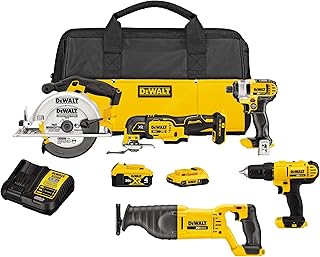
DEWALT Tools 5 Tool Power Tool Combo Kit, Cordless Drill Impact Driver Saw…
4.7★ (1,061 reviews)
A 5-tool cordless combo makes more sense when you’re still working toward that journeyman license and don’t need a full industrial loadout yet — lower entry cost, same DEWALT platform if you scale up later.
For Those Running a Trade Business
If you’re already in a trade and trying to grow your own operation, the income ceiling is largely a business problem, not a skills problem. Most tradespeople who stall out do so because they’re still running everything out of their head — scheduling, invoicing, follow-up — and they can’t scale past two or three trucks.
Field service software won’t make you a better electrician or plumber, but it can help you stop losing revenue to scheduling gaps, forgotten invoices, and jobs that never got a follow-up estimate. Jobber is a common starting point for smaller operations. Housecall Pro has a similar footprint with some differences in how it handles customer communication. Larger companies sometimes look at ServiceTitan, which is built for more complex operations but comes with more complexity and cost.
None of them are magic. But running a tighter operation is how you actually get paid for all the work you’re already doing.
Bottom Line
Six figures in the trades is achievable — in some trades, it’s close to a standard outcome for experienced workers. The fastest paths are licensed trades with industrial or commercial applications, union elevator work, and running your own service business in a high-demand trade. The slower paths are trades with low barriers to entry or ones where the work stays mostly residential.
Pick a trade you can tolerate doing for twenty years, get licensed as fast as the rules allow, and either specialize into higher-paying work or build a business. That’s the actual playbook.