
Some links on this page are affiliate links. If you sign up through one, TradeStackLab earns a commission at no extra cost to you. We only recommend tools we’d actually use on a job, and a commission never buys a better review.
The Short Answer
Yes, a pressure washing business can be profitable. But “can be” is doing a lot of work in that sentence. Margins depend heavily on what you’re washing, how you price, your local market, and how fast you grow beyond just yourself. This guide breaks down the real numbers so you can make an honest assessment before you buy a trailer and a surface cleaner.
What Does Startup Actually Cost?
This is where a lot of people get burned. They see YouTube videos showing guys making $10,000 a month and underestimate what it costs to get there.
Here’s a realistic breakdown for a solo operator starting from scratch:
| Item | Budget Setup | Mid-Range Setup |
|---|---|---|
| Pressure washer (hot or cold) | $800 – $1,500 | $3,000 – $6,000 |
| Surface cleaner attachment | $150 – $300 | $400 – $700 |
| Hoses, guns, nozzles | $200 – $400 | $500 – $900 |
| Trailer or truck setup | $500 – $2,000 | $4,000 – $10,000 |
| Water tank | $100 – $300 | $400 – $800 |
| Chemicals and soaps | $200 – $500 | $500 – $1,000 |
| Insurance (general liability) | $600 – $1,200/yr | $1,200 – $2,500/yr |
| Business registration, misc. | $100 – $400 | $200 – $600 |
| Marketing (website, cards, etc.) | $200 – $600 | $500 – $2,000 |
A bare-bones startup with used equipment can run around $3,000 to $5,000. A solid mid-range setup that you won’t outgrow in year one is more like $10,000 to $20,000. Neither number is small if you’re starting from zero.
One thing a lot of first-timers skip: insurance. Don’t skip it. You’re running a high-pressure machine near homes, vehicles, and landscaping. One busted window or damaged siding and an uninsured claim can end the business before it starts.
Recommended Gear
Affiliate Link
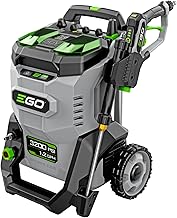
EGO Power+ Electric Pressure Washer, 3200 PSI Power Washer, Battery and Charger Not…
4.4★ (471 reviews)
If you’re testing the waters before committing to a gas rig, the EGO HPW3200 sits in that $800–$1,500 budget-setup range — though battery costs add up if you’re running back-to-back jobs.
How Much Can You Charge Per Job?
Pricing varies by region, but here’s a rough picture of what operators around the country are charging in 2026 for common services:
| Service | Typical Range | Time on Site |
|---|---|---|
| Driveway (residential) | $150 – $300 | 1 – 2 hours |
| House exterior wash | $250 – $600 | 2 – 4 hours |
| Roof soft wash | $300 – $700 | 2 – 4 hours |
| Deck or patio | $150 – $400 | 1 – 3 hours |
| Commercial storefront | $150 – $500+ | 1 – 3 hours |
| Fleet or equipment wash | $50 – $150 per vehicle | Varies |
These are not guarantees. A rural market in the Midwest prices differently than a suburb outside Atlanta or Seattle. Know your local competitors before you set a price sheet.
Recommended Gear
Affiliate Link
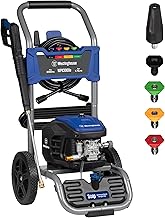
Westinghouse WPX3000e Electric Pressure Washer, 3000 Max PSI and 1.76 Max GPM…
4.7★ (3,130 reviews)
At $279, the Westinghouse WPX3000e is close to the floor of what the article calls a bare-bones startup — workable for residential house washes, but you’ll likely outgrow it before year one ends.
What Are the Real Profit Margins?
This is the part that matters. Revenue is vanity. Margin is what you take home.
For a solo operator, your main costs on each job are:
- Fuel (machine and truck)
- Chemicals and soap
- Equipment wear and depreciation
- Your time (which has a value even if you don’t pay yourself hourly on paper)
On a typical residential house wash, chemicals and fuel might run $20 to $50. That’s low. Which is why pressure washing gets talked about as a high-margin business — and it is, on a per-job basis. Many solo operators report gross margins of 70% to 85% on materials alone.
But that’s not your take-home. You still have to subtract:
- Insurance
- Equipment payments or replacement funds
- Marketing and lead generation
- Software and admin tools
- Taxes (self-employment tax is real and it stings)
Once you account for all of that, a well-run solo operation clearing $80,000 to $120,000 in annual revenue might net $45,000 to $70,000 in actual profit. That’s decent money, especially in year one. But you’re also working hard for it — often six days a week in peak season.
What About Seasonal Work?
Depending on your climate, pressure washing is seasonal. In northern states, you may have a true off-season of two to four months. That cuts your annual revenue significantly unless you diversify — snow removal, holiday lighting installs, or interior services like floor cleaning.
In the South and Southwest, you can work year-round, which changes the math considerably. If you’re evaluating whether this business works for you, be honest about your local weather patterns.
Solo vs. Crew: When Does It Scale?
A solo operator has a ceiling. There are only so many hours in a day, and only so many jobs you can run alone. Most operators hit a wall somewhere between $60,000 and $100,000 in annual revenue as a one-person show.
Adding a crew member opens up more capacity, but your costs jump. You’re now dealing with payroll, workers’ comp, more equipment, and the overhead of managing someone else’s time. Margins compress. Revenue goes up, but profit per dollar of revenue often goes down before it goes back up.
This is the hardest transition in any service business. Don’t rush it. Make sure your lead flow and booking rate actually justify the added cost before you hire.
The Biggest Profit Killers
Most pressure washing businesses that struggle aren’t failing because the margins are bad. They fail because of operational problems. Here’s what trips people up:
- Underpricing. You don’t need to be the cheapest in town to get work. Competing on price alone is a race to the bottom.
- No-shows and cancellations. Without a deposit policy, customers will cancel on you with no warning. That’s a day of lost revenue.
- Poor scheduling. Running across town for a single $150 job between two other jobs kills your effective hourly rate. Route your jobs tightly.
- Equipment downtime. A broken machine means zero revenue. Maintain your equipment, and have a contingency plan.
- Chasing too many one-off customers. Recurring commercial accounts — parking lots, restaurant exteriors, property management contracts — are more stable than always hunting for new residential customers.
How Software Affects the Bottom Line
Once you’re running more than a handful of jobs a week, doing everything by text message and a paper calendar will cost you money. Missed callbacks, double-bookings, forgotten follow-ups — it adds up.
Field service management software helps with scheduling, quotes, invoicing, and following up with customers who haven’t booked in a while. For a small operation, something like Jobber or Housecall Pro handles most of what you need. These aren’t free, but the time you recover — and the jobs you stop losing through the cracks — typically makes them worth the monthly cost.
If you’re scaling into a multi-truck operation with more complex dispatching needs, the calculus changes, and you’d look at something more robust like ServiceTitan.
The point isn’t which software to pick right now. The point is that running your business off memory and spreadsheets is a hidden profit leak.
Recommended Gear

Affiliate Link
20″ Pressure Washer Surface Cleaner with 4 Wheels and Dual Handle, Power Washer…
4.4★ (4,800 reviews)
A surface cleaner is one of the first add-ons the article’s cost table flags for good reason — this 20″ attachment is priced below the budget-tier estimate and makes driveway work significantly faster per hour on site.
Is It Worth Starting in 2026?
The market hasn’t gotten any less competitive, but demand for exterior cleaning services is still solid. Homeowners care about curb appeal. Property managers need to maintain appearances. Commercial accounts need regular maintenance whether the economy is good or not.
The barrier to entry is low, which is both good and bad. You can get started without a lot of capital. But so can every other person who watched the same YouTube videos. Differentiation matters more than it did five years ago. Show up on time, communicate well, do quality work, and follow up. That alone will separate you from a significant chunk of your competition.
If you’re realistic about the startup costs, willing to learn pricing properly, and not expecting to get rich in month three, a pressure washing business is a genuinely viable path. It is profitable — but only if you run it like a business, not a side hustle that eventually got bigger.
Quick Summary
- Startup costs run from roughly $3,000 on the low end to $20,000 for a solid setup
- Job-level margins are high — materials are cheap relative to what you charge
- Net profit for a solo operator typically lands between $45,000 and $70,000 per year depending on market, season, and how well you’re running things
- Scaling beyond solo requires careful cost management or margins compress fast
- Recurring commercial accounts are more stable than chasing residential one-offs
- Software and good scheduling practices are not optional if you’re serious about profit