
The data center construction boom is real, and it is not slowing down. AI infrastructure needs massive amounts of power, cooling, and — this is where you come in — structured cabling and fiber. If you are a low-voltage or fiber technician already working in commercial construction or telecom, there is a straight path into this work. It just requires knowing what the industry actually wants.
This guide is not about hype. It is about the specific skills, certifications, and on-the-job knowledge that get you hired on data center projects, and what the work actually looks like day to day.
Why Data Centers Need Fiber and Low-Voltage Techs Right Now
Every AI training cluster, every GPU rack, and every hyperscale server pod needs structured cabling behind it. We are talking about dense fiber runs, copper patch panels, cable management systems, grounding, and rack-and-stack work. None of that installs itself.
The scale is different from a typical commercial job. A mid-sized hyperscale facility might have tens of thousands of fiber terminations. Modular data centers are being deployed in clusters. Speed to power-on matters — owners are not waiting around. That pressure creates steady demand for experienced hands who can work fast and accurately.
Low-voltage and fiber techs are the people who actually build out the physical network layer. That work does not go away because AI got smarter. If anything, AI makes it more essential.
What the Work Actually Involves
Before you chase a data center job, understand what you are walking into. It is not like residential or light commercial low-voltage work.
Structured Cabling
Most data centers use a combination of copper (Cat 6A is common for in-rack and short runs) and single-mode or multimode fiber for backbone and inter-row connectivity. You will be pulling, dressing, terminating, and testing — a lot of it, under tight tolerances.
Fiber Termination and Splicing
High-density fiber is the backbone of AI compute infrastructure. Fusion splicing, pre-terminated MPO/MTP trunk systems, and OTDR testing are all standard. If you cannot read an OTDR trace and troubleshoot a bad splice, you will struggle. If you can, you are worth hiring.
Rack and Stack
Installing patch panels, fiber enclosures, cable managers, and sometimes switches and PDUs falls under low-voltage scope on many projects. Attention to cable dress matters. These facilities get audited and photographed. Sloppy work gets rejected.
Testing and Documentation
Every link needs to be tested and documented. Fluke or VIAVI test sets are common. You need to know how to run certification tests, export results, and hand off clean documentation to the owner or general contractor. This is not optional — it is a contract requirement.
Working in a Critical Environment
Data centers have strict access rules, ESD precautions, and often work alongside energized equipment. You follow procedures or you get walked off the site. There is no gray area here.
Skills That Actually Get You Hired
Here is what separates applicants who get callbacks from those who do not.
- Fusion splicing. Single-mode fiber splicing is in high demand. If you have not learned it, find a way to get trained. Community colleges, manufacturer training programs, and union apprenticeships all offer this.
- MPO/MTP fiber systems. High-density pre-terminated trunk systems are everywhere in modern data centers. Knowing how to handle, test, and troubleshoot them is a differentiator.
- OTDR operation. Reading traces, identifying faults, and documenting results is expected on fiber work at this scale.
- Cable certification testing. Know how to run and interpret a Fluke DSX or similar tester on copper links.
- Structured cabling standards. ANSI/TIA-568 and BICSI standards govern most of this work. You do not need to memorize them, but you need to know they exist and where to look things up.
- Physical security clearance readiness. Many facilities require background checks. If yours would not pass, that is something to address before applying.
- The ability to read drawings. You will get handed riser diagrams and floor plans. If you cannot interpret them, you will slow the whole crew down.
Recommended Gear

Affiliate Link
Fluke Networks LIQ-100 LinkIQ Cable + Network Tester
4.4★ (96 reviews)
The article calls cable certification testing a contract requirement, not an option — a tester like this handles the copper link certification and documentation handoff the owner actually expects.
Certifications Worth Getting
Certs are not magic. They do not replace hands-on experience. But in a competitive hiring environment, they signal to a project manager that you know the basics and that someone has verified it.
| Certification | Issuing Body | What It Shows | Worth It? |
|---|---|---|---|
| BICSI Installer 2 (Copper and/or Optical Fiber) | BICSI | Hands-on structured cabling competency | Yes — widely recognized on commercial and data center projects |
| BICSI RCDD | BICSI | Design-level credential, requires experience | Yes, if you want to move into design or project management |
| FOA CFOT | Fiber Optic Association | Fiber optic technician fundamentals | Good entry-level fiber credential, affordable |
| FOA CFOS/T (Splicing) | Fiber Optic Association | Fusion splicing specifically | Yes, especially for data center fiber work |
| Fluke Networks Accredited Technician | Fluke Networks | Proficiency with their test equipment | Situationally useful; depends on what the project requires |
| OSHA 10 or 30 | OSHA | Basic safety awareness | Required on most commercial construction sites regardless |
One honest note: some data center contractors care more about your hands-on experience and references than your cert stack. Others — especially those working for large technology company clients — require certain certs as a baseline just to get on the approved subcontractor list. Know your market.
Recommended Gear
Affiliate Link
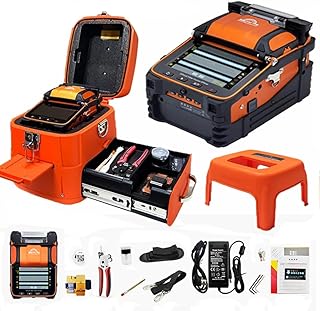
SM&MM Six Motor Core Alignment Fiber Fusion Splicer Automatic FTTH Fiber Optical…
4.4★ (103 reviews)
Fusion splicing single-mode fiber is flagged here as one of the highest-demand skills for data center entry; a core-alignment splicer is what that work actually requires, though the learning curve is real before you’re production-fast.
How to Find Data Center Low-Voltage Cabling Jobs
This work is almost always subcontracted. The general contractor running a data center build is not usually the one installing your cabling. They hire structured cabling contractors, specialty fiber contractors, and sometimes system integrators.
Here is where to look:
- BICSI’s contractor directory. Companies listed there are often bidding on data center work and need qualified techs.
- IBEW locals. The electrical union has significant presence in data center construction. If you are not union, some areas require it to get on certain job sites.
- Specialty cabling and AV contractors. Look for companies that advertise data center experience specifically, not just general low-voltage.
- LinkedIn and Indeed. Search “data center structured cabling technician” or “fiber technician data center.” Filter by location — data center builds cluster around specific metros and rural power corridors.
- Referrals from the field. Talk to people in your network who are already on these projects. Word of mouth still drives a lot of hiring in the trades.
Where the Work Is Located
Data center construction concentrates in specific regions. Northern Virginia, the Phoenix metro, the Dallas-Fort Worth area, Iowa, and the Pacific Northwest (particularly around cheap hydropower) see heavy activity. Secondary markets are growing as power availability shapes where builds go.
Much of this work is project-based. That means you may need to travel, especially if you are working for a specialty contractor that follows data center builds across the country. Per diem and travel pay are common on these projects, which matters when you are evaluating a job offer.
What the Pay Looks Like
Pay varies significantly by region, union status, and your specific skill set. That said, fiber and structured cabling technicians on data center projects generally earn more than the same trade on standard commercial work, because the pace, precision, and accountability requirements are higher.
Fusion splice techs and OTDR-qualified fiber technicians tend to sit at the higher end of the pay range for installation work. Lead technicians and foremen with data center experience can earn considerably more. If you want specifics for your region, look at current job postings — they tell you more than any published figure.
The trade-off is that this work can be demanding. Long days, tight deadlines, and the pressure of working in a critical environment are real. Some people thrive in that environment. Others find it grinding. Know yourself before you commit to it full time.
Recommended Gear

Affiliate Link
Fluke Networks MS2-100 MicroScanner2 Copper Cable Verifier with Built-In IntelliTone…
4.5★ (384 reviews)
Useful for verifying copper infrastructure and tracing runs, though the article’s emphasis on Cat 6A certification testing at data center scale points toward needing a full DSX-class tester for the contract documentation piece.
What to Expect in the Interview
Data center cabling contractors often ask practical questions. Be ready to talk through:
- How you handle a fiber link that fails OTDR certification after splicing
- Your experience with MPO/MTP systems and polarity
- How you document test results and what software or tools you have used
- Your familiarity with TIA-942 (the data center infrastructure standard) — you do not need to be an expert, but knowing it exists helps
- How you handle working alongside other trades in a fast-moving environment
Be honest about what you have and have not done. Experienced project managers can tell when you are padding. It is better to say “I have done X but not Y, and I am working on getting that” than to overstate your experience and get caught short on the job site.
The Path Forward
If you are a low-voltage or fiber technician looking at data center work, the barrier is not as high as it might seem. The fundamentals transfer. What you need to add is exposure to high-density fiber systems, the right certifications to get on approved lists, and some patience in finding the right contractor to get your first project under your belt.
Once you have that first data center project on your resume, the next one is easier to land. The contractor community is smaller than it looks, and reputation travels. Do good work, learn the documentation standards, and treat the environment with the seriousness it requires.
The AI boom is not going to stop needing cabling. The techs who know how to do this work well are going to stay busy for a long time.