
Some links on this page are affiliate links. If you sign up through one, TradeStackLab earns a commission at no extra cost to you. We only recommend tools we’d actually use on a job, and a commission never buys a better review.
Is Mobile Tire Repair Worth Starting?
The honest answer: it depends on your market and how hard you’re willing to hustle. Mobile tire repair has low startup costs compared to most trades, you don’t need a shop, and demand is steady — people get flat tires every day. But margins are thin if you don’t price right, and you’ll be working in traffic, in the rain, and on a customer’s schedule.
If you want a solo operation or a small crew with minimal overhead, this is a realistic path. If you’re expecting easy money, look elsewhere.
What Services Will You Actually Offer?
Before you buy anything, get clear on your service list. Most mobile tire businesses start with a few core offerings and expand from there.
Common starting services
- Flat tire repair (plug and patch)
- Roadside spare tire installation
- Tire mounting and balancing (requires more equipment)
- Tire pressure checks and valve stem replacement
- TPMS sensor service
More advanced offerings
- Full tire sales and installation at the customer’s location
- Fleet tire service (commercial vehicles, delivery fleets)
- Seasonal tire changeovers (common in snow regions)
- Agricultural and heavy equipment tire repair
Fleet accounts are where real money is. One contract with a local delivery company or construction outfit beats chasing individual roadside calls all week. Start thinking about that early.
Equipment You’ll Need
Here’s the reality: the bare minimum to do plug-and-patch roadside repairs is cheap. A full mobile mounting and balancing setup is not. Know which business you’re starting.
Basic roadside repair setup
- Air compressor: A portable 12V compressor works for basic inflation, but a quality gas-powered or heavy-duty electric compressor is faster and more reliable for actual work.
- Tire plug and patch kit: Basic kits are inexpensive. Stock plenty of plugs, patches, and rubber cement.
- Bead sealer: Useful for stubborn seals.
- Breaker bar and impact wrench: Cordless impact wrenches work fine for most passenger vehicles.
- Floor jack and jack stands: Don’t trust the customer’s factory jack. Bring your own.
- Valve stem tools and replacement stems: Cheap, but you’ll use them constantly.
- Tire spoons/irons: For hand-mounting if you’re not running a machine.
- Safety equipment: Reflective vest, road flares or LED triangles, gloves, knee pads. Non-negotiable.
For mounting and balancing
- Portable tire changer: There are trailer-mounted and truck-bed units available. Expect a real investment here — quality machines aren’t cheap.
- Portable balancer: Same story. A good road-force balancer takes up space and costs money.
- Generator: To run electric equipment if you’re not using a truck with a power takeoff.
Your vehicle
A reliable truck or cargo van is your shop on wheels. Most people start with a pickup truck with a utility bed or a full-size cargo van. Whatever you use, it needs to be dependable — if your vehicle breaks down, your business stops. Keep up on maintenance religiously.
Recommended Gear

Affiliate Link
Milwaukee M18 FUEL 18V Lithium-Ion Brushless Cordless 1 in. Impact Wrench Extended…
4.8★ (118 reviews)
The article notes cordless impact wrenches ‘work fine for most passenger vehicles’ — the Milwaukee M18 FUEL is toward the premium end of that category, which matters when you’re on your third roadside call in the rain.
Startup Costs: What to Expect
There’s a wide range depending on what you’re starting with. The table below gives rough ballparks based on a typical solo operator in 2026. These are estimates — prices vary by region and supplier.
| Item | Estimated Cost Range |
|---|---|
| Used cargo van or pickup truck | $8,000 – $25,000+ |
| Portable air compressor (quality unit) | $300 – $1,200 |
| Impact wrench, jack, jack stands | $300 – $700 |
| Plug/patch supplies and hand tools | $100 – $300 |
| Safety gear | $100 – $250 |
| Business license and registration | $50 – $400 (varies by state/county) |
| General liability insurance | $600 – $1,500/year |
| Portable tire changer (if applicable) | $2,000 – $8,000+ |
| Portable balancer (if applicable) | $1,500 – $5,000+ |
| Website and basic marketing | $200 – $800 |
A roadside-only operation can realistically get started for under $5,000 if you already have a truck. A full mounting and balancing setup will run you significantly more. Don’t buy equipment you’re not ready to use profitably.
Licensing, Insurance, and Legal Stuff
Don’t skip this section. Working without proper coverage is a fast way to lose everything.
Business registration
At minimum, register your business name and get a local business license. Most people start as a sole proprietor or LLC. An LLC gives you some liability separation — worth the paperwork. Talk to a local accountant or attorney if you’re unsure which structure makes sense.
Insurance
You need general liability insurance. If you’re working on someone’s car and something goes wrong — a rim gets damaged, a vehicle rolls — you need coverage. Commercial auto insurance is also required if you’re using your vehicle for business. Your personal auto policy almost certainly won’t cover you. Don’t assume otherwise.
State and local regulations
Some states require specific certifications for tire work. Others have rules about roadside work, hazardous material disposal (old tires), or operating in certain zones. Check with your state’s business licensing office and your local municipality. This isn’t glamorous, but a fine or shutdown order is worse.
How to Price Your Services
Pricing is where most new mobile tire businesses mess up. They either undercut themselves trying to compete with shops or they haven’t accounted for drive time, fuel, and the fact that not every job is a quick plug repair.
Think in terms of your costs
Before setting prices, know your costs. That means fuel, insurance, supplies, vehicle wear, and your own time — including driving to the job, not just the time you’re turning wrenches.
Typical pricing ranges (2026)
These are general ranges based on what the market typically bears. Your local market may be higher or lower.
- Flat tire plug repair: $30 – $75 depending on location and call type
- Spare tire installation (roadside): $50 – $100
- Tire mounting and balancing (per tire): $20 – $45
- Valve stem replacement: $15 – $30 per stem
- After-hours or emergency surcharge: $25 – $75 on top of base rate
- Fleet service: Negotiated contract pricing — usually a volume discount with guaranteed volume in return
Charge for your drive time
If you’re driving 30 minutes to a job, that time costs you money. Either build a service call fee into every job or set a minimum charge. Don’t show up for a $35 repair that took an hour of your day and cost you $15 in fuel to get there.
Don’t just undercut shops
Convenience is worth something. Most customers calling a mobile tire service aren’t calling because you’re the cheapest option — they’re calling because they can’t or don’t want to drive to a shop. Price accordingly. A few dollars less than the local shop is fine. Giving your time away is not.
Recommended Gear
Affiliate Link
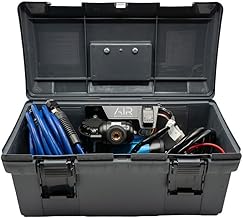
ARB CKMP12 Portable Air Compressor 12V High Performance and Output Compressor
4.6★ (355 reviews)
The ARB CKMP12 sits right in the article’s $300–$1,200 compressor range and is built for 12V truck use — a solid fit for the roadside-only setup the article describes as the realistic starting point.
How to Get Your First Jobs
Marketing a mobile service is different from marketing a brick-and-mortar shop. You’re selling convenience and availability. Here’s what actually works when you’re starting out.
Google Business Profile
Set this up before anything else. When someone searches for tire help in your area, you want your name to show up. Fill out every field, add photos of your setup, and get as many reviews as you can from your first customers. This is free and it works.
Local Facebook groups and Nextdoor
Join local community groups and introduce yourself. Don’t spam — just be genuinely helpful and let people know you exist. When someone posts about a flat tire, being the person who shows up matters more than any ad campaign.
Roadside assistance partnerships
Contact motor clubs and roadside assistance networks. Some will dispatch to independent providers. The pay-per-call rates aren’t always great, but it’s volume that keeps you busy while you build your own customer base.
Tow companies and auto shops
Tow companies run into flat tire situations constantly. Some don’t want to handle them. If you can build a referral relationship with one or two local tow operators, that’s a steady stream of work. Same goes for auto shops that don’t do tires — they’ll send customers your way if you’ve made the introduction.
Fleet outreach
Make a list of local businesses with vehicle fleets — delivery companies, landscapers, HVAC contractors, plumbing companies, construction firms. Call or stop by and introduce yourself. Offer a free tire inspection or a trial. Fleet work is slower to close but far more valuable than one-off roadside calls.
A simple website
You don’t need anything fancy. A page that explains what you do, where you serve, how to reach you, and what you charge is enough. Make sure it loads fast on a phone — most people searching for your service are doing it on mobile, often from the side of the road.
Running the Business Day to Day
Once jobs start coming in, you need a system. Taking calls, scheduling, invoicing, and keeping records by hand gets old fast and leads to mistakes.
Field service management software
For a solo mobile operation, a simple scheduling and invoicing tool goes a long way. Software built for field service businesses — the kind used by HVAC and plumbing contractors — often works well for mobile tire techs too. You can take bookings, send invoices from your phone, collect payments on the spot, and keep customer records without a filing cabinet.
Tools like Jobber or Housecall Pro are worth looking at once you’re booking enough jobs that managing them on a notepad stops working. Neither is built specifically for tire work, but both handle scheduling, quoting, and invoicing well for a solo or small-crew operation.
Payments
Accept cards from day one. Most customers don’t carry cash. A simple card reader on your phone is fine to start. Make sure you’re also set up to invoice fleet customers on net terms — commercial accounts often won’t pay on the spot.
Tracking your numbers
Know your revenue, your costs, and your profit margin every month. If you’re not making money, you need to know why — is it slow volume, bad pricing, or too much drive time per job? You can’t fix what you don’t measure.
Recommended Gear

Affiliate Link
Autel MaxiTPMS TS508WF KIT, 2026 TPMS Programming Relearn Tool, WiFi Ver. of TS508…
4.7★ (94 reviews)
If you’re adding TPMS sensor service to your list — which the article flags as a starter offering — the Autel TS508WF handles programming and relearn in one tool, though the upfront cost means it needs to show up in your pricing.
Common Mistakes to Avoid
- Underpricing out of fear: Charging too little doesn’t win loyal customers — it wins cheap ones. Price for your costs plus a real margin.
- Buying too much equipment too soon: Start with what you need to do the jobs you have. Add equipment as revenue justifies it.
- Skipping insurance: One bad job without coverage can wipe you out. This is not optional.
- Ignoring fleet opportunities: One-off roadside calls are the start. Fleet accounts are the business.
- No system for reviews: After every job, ask the customer to leave a Google review. Most won’t unless you ask. The ones who do are worth more than any ad you’ll run.
- Forgetting tire disposal: Used tires are a regulated waste in most states. Know how to dispose of them legally and factor the cost in.
Is This the Right Business for You?
Mobile tire repair is legitimate work. It’s physical, it’s outside, and you’re dealing with customers who are usually stressed when they call you. The upside is real independence, low overhead, and a service that people genuinely need.
It’s not passive income. You’ll work when customers need you, which includes weekends and bad weather. Growth means either working more hours or hiring help, which brings its own complications.
But if you want to build something with your own hands without a massive investment or a lease on a building, this is a solid place to start. Get the basics right — proper pricing, real insurance, a few good referral sources — and there’s a workable business here.