
Some links on this page are affiliate links. If you sign up through one, TradeStackLab earns a commission at no extra cost to you. We only recommend tools we’d actually use on a job, and a commission never buys a better review.
Why Data Centers Are Hiring Electricians Right Now
The AI boom is real, and it needs power. Massive amounts of it. Every large language model, every GPU cluster, every inference server has to plug into the wall somehow. That means data centers are being built and expanded at a pace most of the industry hasn’t seen before. And behind every one of those facilities is a crew of electricians keeping the lights on — literally.
If you’re a journeyman or master electrician looking for steadier work, better pay, or a way off the seasonal grind, electrician data center jobs are worth a serious look. This guide covers what you actually need to get in the door: the certifications, the skills, and what you can realistically expect to earn.
What the Work Actually Looks Like
Data center electrical work splits into two phases: construction and operations. They’re different jobs with different demands.
Construction Phase
This is what most commercial electricians are already familiar with — conduit, wire pulls, gear installation, terminations. The difference is the scale and the tolerance for error. A data center might have hundreds of electrical panels, critical redundancy systems, and equipment that costs more than most houses. Mistakes get noticed fast.
You’ll work alongside other trades on a tight schedule. General contractors on hyperscale projects run multiple shifts. The work can be intense but it pays well and tends to run for months.
Operations and Maintenance (O&M)
This is where the long-term careers are. Once a facility is live, someone has to keep it running around the clock. O&M electricians handle preventive maintenance on UPS systems, generators, automatic transfer switches (ATS), power distribution units (PDUs), and switchgear. They respond to alarms. They perform planned maintenance during maintenance windows — often in the middle of the night because the servers never stop.
This work is methodical. You follow procedures. You document everything. It suits electricians who like working with complex systems and don’t mind shift work.
Certifications That Actually Matter
There’s no single “data center electrician” license. What employers look for is a combination of your existing trade credentials and a few specialized certifications that show you understand critical power systems.
Your Journeyman or Master License
This is the baseline. If you don’t have your journeyman card, you won’t be considered for most O&M roles. Some construction subcontractors will take apprentices, but licensed tradespeople get priority.
OSHA 30
Nearly every large data center construction site requires OSHA 30 for supervisory and lead positions. If you only have OSHA 10, get the 30. It’s a two-day course and it opens more doors than almost anything else on this list.
NFPA 70E — Arc Flash and Electrical Safety
Data centers run live. You’ll work around energized equipment more often than in most commercial settings. NFPA 70E training is frequently required before you’re allowed on the floor in an operations role. Many sites require refresher training every few years. Take this seriously — arc flash incidents in high-density electrical environments are no joke.
ETA International — Data Center Technician (DCT)
ETA offers a Data Center Technician certification that covers power, cooling, cabling, and safety fundamentals. It’s not the hardest cert to get, but having it on your resume shows you’ve at least oriented yourself to the industry. Some employers use it as a screening filter.
Uptime Institute — ATD (Accredited Tier Designer) / Operations Certifications
Uptime Institute certifications are well-regarded in the data center industry, particularly at the enterprise and hyperscale level. They’re expensive and more relevant if you’re moving into a senior O&M or facilities management role. If you’re just breaking in, don’t prioritize these first — but know they exist as a path upward.
Manufacturer Certifications
Schneider Electric, Eaton, and Vertiv all offer training on their UPS and PDU equipment. If you can get factory training on a specific product line, that’s genuinely valuable. Facilities are often locked into a single vendor’s ecosystem, and a tech who already knows the gear saves them onboarding time.
BICSI — For the Overlap With Low Voltage
Some data center electricians cross over into structured cabling and low-voltage work. BICSI credentials are the standard there. Not required for power-focused roles, but useful if you want to be more versatile.
Recommended Gear

Affiliate Link
Fluke 4692725 1587/I400 FC 2-in-1 Insulation Multimeter with Clamp
4.6★ (174 reviews)
The kind of insulation/clamp combo meter that makes sense for O&M electricians who need to test UPS systems and PDUs without swapping tools mid-shift — the two-in-one format fits the ‘document everything’ discipline the article describes.
Skills That Set You Apart
Certifications get you in the door. These skills keep you employed and move you up.
- Understanding of critical power systems: Know how UPS systems work — static, rotary, the difference between double-conversion and line-interactive. Understand generator systems, ATS logic, and how redundancy (N+1, 2N) affects operations.
- Switchgear and breaker knowledge: Medium-voltage switchgear experience is valuable and not common. If you’ve worked with MV gear, say so clearly on your resume.
- Power quality fundamentals: Harmonics, power factor, load balancing. You don’t need to be an engineer, but you should understand what a power quality analyzer is showing you.
- Reading single-line diagrams: Non-negotiable. O&M electricians work from SLDs constantly. If you’re rusty, practice.
- Written documentation: Data centers run on paperwork. Every maintenance task gets logged. Work orders, deviation reports, change management forms. If you resist writing things down, O&M work will frustrate you.
- Shift flexibility: A lot of planned maintenance happens on weekends or overnight. Being willing to work those windows is a real advantage when you’re starting out.
- Staying calm under pressure: When a critical alarm goes off and half a million dollars of server hardware is at risk, someone needs to troubleshoot methodically. That’s the job.
What the Pay Looks Like
Data center work generally pays above standard commercial rates. Here’s a rough sense of the range as of 2026, though it varies significantly by region, employer, and whether you’re on construction or O&M.
| Role | Typical Hourly Range | Notes |
|---|---|---|
| Construction Electrician (Journeyman) | $40 – $65/hr | Union scale in major markets pushes toward the top |
| O&M Electrician / Critical Facilities Tech | $35 – $60/hr | Salary roles common; shift differentials add up |
| Senior / Lead O&M Technician | $60 – $80/hr equivalent | Often salaried with overtime, on-call pay |
| Facilities Manager (Electrical Focus) | $90,000 – $130,000+/yr | Requires years of data center O&M experience |
These numbers aren’t guarantees. Markets like Northern Virginia, Phoenix, Dallas, and Chicago — all heavy data center corridors — tend to pay at the higher end. Rural or secondary markets pay less but cost of living adjusts accordingly.
Union electricians on large hyperscale construction projects often earn strong rates with good benefits. If you’re IBEW and your local has a presence in data center construction, talk to your business agent — there’s likely work already.
Recommended Gear
Affiliate Link
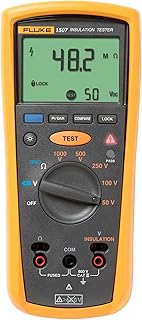
Fluke 1507 Digital Megohmmeter Insulation Resistance Tester, for Advanced Industrial…
4.5★ (277 reviews)
Insulation resistance testing on live data center power distribution isn’t optional maintenance — it’s the methodical, procedural work the article says separates O&M roles from construction. Multiple test voltages matter when you’re working across mixed-voltage critical power gear.
Where to Find the Jobs
The hiring landscape for data center electrical work runs through a few different channels.
- Electrical contractors: Large commercial and industrial electrical contractors — Rosendin, IEC, Baker Electric, and similar firms — are often the subcontractors on major data center builds. Apply directly to them.
- Facilities management companies: Companies like CBRE, Jones Lang LaSalle (JLL), and Iron Mountain manage data center operations for owners and hire O&M technicians directly. Search their job boards.
- Hyperscalers directly: Amazon Web Services, Microsoft Azure, Google, and Meta all hire critical facilities staff in-house for their owned facilities. These are often competitive positions with strong benefits.
- Staffing agencies: For construction work especially, agencies that specialize in skilled trades sometimes place electricians on data center projects. Quality varies, but it’s a way in.
- LinkedIn and Indeed: Search “critical facilities technician,” “data center electrician,” or “MEP technician” in addition to straightforward job titles. The naming conventions in this industry are inconsistent.
A Realistic Path In
If you’re starting from a standard commercial electrician background, here’s a sensible sequence:
- Make sure your journeyman license is current and reciprocal if you’re willing to relocate.
- Get OSHA 30 if you don’t have it. Get NFPA 70E training.
- Look for a data center construction project through your current contractor or a new employer. Getting on-site experience, even as a wireman, starts building your resume.
- While on the construction side, learn the systems. Ask questions. Understand what you’re installing, not just how to install it.
- Target an O&M role after you have site familiarity. Many O&M employers prefer to hire people who’ve been around the equipment.
- Pick up manufacturer training on whatever UPS or switchgear platforms are common in your region.
It’s not a fast path, but it’s a clear one. The electricians doing well in this space didn’t get there overnight — they built knowledge steadily and positioned themselves when the work came available.
The Honest Trade-Offs
Data center O&M work isn’t for everyone. Shift work affects your life outside the job. Some facilities run lean crews, which means you’re responsible for a lot of equipment with limited backup. The documentation requirements feel bureaucratic if you’re used to working independently. And in operations roles, you often can’t just fix something — you have to follow a change management process first, which can feel slow when you can clearly see the problem.
On the construction side, the hours can be brutal during crunch phases. Some projects have had labor issues. Do your homework on the contractor before you sign on.
That said, the pay is real, the demand isn’t slowing down, and for electricians who want a long-term career path that isn’t dependent on weather or residential cycles, it’s one of the better bets in the trade right now.
Recommended Gear
Affiliate Link
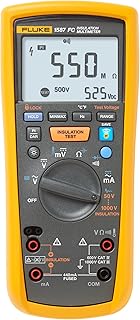
FLUKE-1587 FC FLUKE 1587 FC 2-in-1 Insulation Multimeter
4.7★ (265 reviews)
A capable middle ground between the entry-level and the full clamp combo — if you’re transitioning from commercial work into data center O&M and building out your kit, this covers the insulation testing side without the added cost of the integrated clamp.
Managing Your Business While You Transition
If you’re currently running your own electrical contracting business and considering whether to shift toward data center subcontracting or pursue direct employment, the administrative side of your current operation still needs attention during any transition. Scheduling, invoicing, and job tracking don’t manage themselves.
Tools like Jobber are built for exactly the kind of small electrical contracting operation that’s weighing these decisions — they won’t solve the career question, but they’ll keep your current work from falling through the cracks while you figure out your next move.
Bottom Line
AI data center work is a real opportunity for electricians who are willing to learn new systems and adapt to a different work environment. The pay is solid, the demand is durable, and the skills transfer well as you move up. The entry requirements aren’t exotic — a license, OSHA 30, NFPA 70E, and a willingness to learn critical power systems will get most experienced electricians into a serious conversation with employers.
Do the certifications. Learn the systems. Get on a project. The rest follows from there.