
A shop vac is one of those tools you buy once and use forever — if you buy the right one. The wrong one sits in the corner because it clogs on sawdust, loses suction after six months, or tips over every time you drag the hose around a workbench.
This list covers the best shop vacs across different shop sizes, budgets, and use cases. We looked at suction power, tank size, filter quality, hose length, durability, and value. No single model is perfect for everyone, so we’ll tell you exactly who each one is built for.
What to Look for Before You Buy
Tank Size
Bigger isn’t always better. A 16-gallon tank is heavy when full and awkward in a small shop. For most homeowners and light shop work, 5–10 gallons is plenty. If you’re cleaning up after drywall, demo, or heavy woodworking sessions, go 12–16 gallons.
Motor Power (Peak HP vs. Actual Performance)
Peak horsepower numbers on shop vac boxes are marketing. They measure a momentary spike, not sustained performance. Pay more attention to airflow (CFM — cubic feet per minute) and sealed suction (water lift in inches). Higher CFM moves more volume; higher water lift picks up heavier debris.
Filtration
Standard foam filters work fine for wet pickup and general debris. Fine dust — from sanding, drywall, or concrete — needs a fine-dust cartridge filter or a HEPA filter. Don’t skip this if you’re doing woodworking or concrete grinding. The dust will either blow right back into the air or destroy the motor over time.
Hose Length and Diameter
A 7-foot hose sounds fine until you’re dragging the entire unit around a car or a workbench. Look for at least 7 feet; 10–12 feet is better for larger shops. Wider hoses (2.5 inches) move debris faster but are less maneuverable for detail work.
Wet Pickup
Most shop vacs handle wet pickup, but you need to remove the filter first. Some models have a separate foam sleeve for wet use. Know this before you suck up water with a cartridge filter in place — you’ll ruin the filter and potentially the motor.
Recommended Gear

Affiliate Link
DEWALT DXV16PA 16 Gallon Poly Wet/Dry Vac/Acc, 6.5HP Shop Vacuum Wet/Dry for…
4.7★ (5,408 reviews)
If you want a step up from the RIDGID 14-gallon but prefer poly construction over stainless, the DEWALT 16-gallon lands in the same heavy-use category — though at 16 gallons, expect the same full-tank weight warnings to apply.
The Best Shop Vacs for 2026
1. RIDGID 14-Gallon 6.0 Peak HP Wet/Dry Vac — Best Overall for a Workshop
RIDGID has dominated the shop vac market for years, and the 14-gallon model holds that position for good reason. It’s built tough, the motor holds up under heavy use, and replacement parts are easy to find at any home center.
- Tank: 14 gallons — large enough for a full shop cleanup session without constantly emptying
- Motor: 6.0 peak HP — strong suction for sawdust, wood chips, metal shavings, and wet spills
- Hose: 7 feet standard, though an extension is worth buying
- Filter: Comes with a standard cartridge; upgrade to a fine-dust filter for woodworking
- Accessories: Good set out of the box — car nozzle, crevice tool, utility nozzle
Where it’s weak: The 14-gallon tank gets heavy fast when full of wet material. The drum-style design can tip if the hose pulls at an angle. The standard filter isn’t great for fine dust without an upgrade.
Best for: General workshop cleanup, garages, construction sites, and anyone who needs a workhorse that will last years without babying.
2. RIDGID 6-Gallon Wet/Dry Vac — Best Compact Option
If your shop is small, you work out of a van, or you just don’t want to drag a 14-gallon drum around, the 6-gallon RIDGID is the compact answer. It still moves serious air for its size.
- Tank: 6 gallons — light enough to carry with one hand when empty
- Motor: 3.5–4.0 peak HP depending on model variant
- Portability: Much easier to move around a vehicle, tight shop, or jobsite
- Noise: Smaller motor means a bit quieter than the full-size units
Where it’s weak: You’ll be emptying it more often during big cleanups. Not ideal for demo work, drywall, or flooded areas.
Best for: Small garages, detailing work, mobile mechanics, or a second vac kept at a specific workstation.
3. Festool CLEANTEC CT 15 — Best for Fine Dust and Woodworking
If you’re a serious woodworker or you work with materials that produce dangerous fine dust — MDF, drywall, concrete — the Festool CT 15 is in a different category. It’s a dust extractor more than a traditional shop vac, and it shows.
- Filtration: HEPA-rated — captures fine dust that standard shop vac filters miss entirely
- Auto-clean filter: Pulses to knock dust off the filter without stopping work
- Tool trigger: Turns the vac on and off automatically with your power tool
- Build quality: German-made, tight tolerances, built for a professional woodworking environment
- Compatibility: Works seamlessly with Festool tools and most standard dust port sizes with adapters
Where it’s weak: The price is significantly higher than a standard shop vac. It’s not the right tool for sucking up standing water or heavy wet debris. Replacement bags add ongoing cost. This is a specialist tool, not a garage all-rounder.
Best for: Cabinet makers, furniture builders, finish carpenters — anyone doing precision woodworking who cares about air quality and tool integration.
4. Vacmaster Professional 16-Gallon — Best for Heavy-Duty Cleanup
When you need raw capacity — demo cleanup, flooded basement, post-renovation debris — the Vacmaster 16-gallon steps up. It offers a large tank and strong suction at a price that undercuts some of the name-brand competition.
- Tank: 16 gallons — among the largest in the consumer/prosumer category
- Motor: Strong CFM and water lift for heavy wet and dry pickup
- Hose: Longer hose than many competitors — reduces how often you have to move the unit
- Price: Generally costs less than a comparable RIDGID or Craftsman of the same size
Where it’s weak: Brand recognition is lower, so parts and accessories aren’t as universally stocked. The tank is heavy when full — you’ll want wheels on smooth floors. Filter quality out of the box is basic.
Best for: Contractors doing demo or water damage cleanup, homeowners tackling major renovations, or anyone who needs maximum capacity on a budget.
5. Craftsman 2.5-Gallon Portable Wet/Dry Vac — Best Budget Pick
Not every shop vac needs to be a serious investment. If you need something to clean up a small workspace, a car interior, or a utility room, the Craftsman 2.5-gallon portable does the job without spending much.
- Tank: 2.5 gallons — tiny, but fine for light duty
- Portability: Light enough to carry anywhere, fits on a shelf
- Price: Among the most affordable wet/dry vacs available
- Accessories: Basic set — adequate for car cleanup and small messes
Where it’s weak: Very limited capacity. Not suited for workshop dust collection, heavy debris, or anything requiring sustained suction. The motor isn’t in the same class as the full-size units.
Best for: Car detailers, small apartment workshops, or a grab-and-go vac for light work. Not a replacement for a real shop vac if you work seriously in a garage.
6. Milwaukee M18 FUEL Cordless Wet/Dry Vac — Best Cordless Option
Battery-powered shop vacs have gotten genuinely useful. The Milwaukee M18 FUEL version holds up in real work environments — on a jobsite, in a van, or anywhere you don’t want to deal with a cord.
- Power source: M18 battery platform — if you’re already in the Milwaukee ecosystem, you likely have batteries
- Tank: Around 2–3 gallons depending on model configuration
- Suction: Competitive with many corded compact vacs for light to medium debris
- Portability: No cord, no outlet needed — genuinely useful on a roof, in a crawlspace, or in a vehicle
Where it’s weak: Battery life limits run time — fine for cleanup tasks, frustrating for sustained use. Tank size is small. If you’re not already in the M18 system, the entry cost is high. Not a replacement for a full corded unit in a dedicated workshop.
Best for: Electricians, plumbers, roofers, and tradespeople working away from outlets who already own M18 tools. Not the right choice as a primary shop vac.
Recommended Gear
Affiliate Link
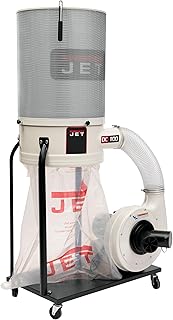
JET Vortex Cone Dust Collector with 2-Micron Canister Filter, 1-1/2 HP, 115/230V 1Ph…
4.6★ (193 reviews)
Not a shop vac — but if fine dust from woodworking or concrete is your actual problem, a dedicated vortex dust collector at the tool handles it before it ever reaches a filter, which is the cleaner long-term solution.
Side-by-Side Comparison
| Model | Tank Size | Best For | Filtration | Power Source | Price Range |
|---|---|---|---|---|---|
| RIDGID 14-Gallon | 14 gallons | General workshop / garage | Cartridge (upgradeable) | Corded | Mid-range |
| RIDGID 6-Gallon | 6 gallons | Compact / portable use | Cartridge | Corded | Budget–Mid |
| Festool CT 15 | ~4 gallons | Fine dust / woodworking | HEPA | Corded | Premium |
| Vacmaster 16-Gallon | 16 gallons | Heavy-duty / demo cleanup | Cartridge (basic) | Corded | Budget–Mid |
| Craftsman 2.5-Gallon | 2.5 gallons | Light duty / cars | Basic filter | Corded | Budget |
| Milwaukee M18 FUEL | 2–3 gallons | Jobsite / cordless trades | Cartridge | Battery (M18) | Mid–Premium |
Recommended Gear

Affiliate Link
RIDGID 50353 1610RV Stainless Steel 16-Gal. Wet Dry Shop Vacuum with Cart, 6.5 Peak…
4.4★ (288 reviews)
The stainless cart version of RIDGID’s 16-gallon addresses one of the drum-style design’s real weaknesses mentioned here — the built-in cart reduces tip-over risk when the hose pulls at an angle.
Frequently Asked Questions
Do I need to remove the filter for wet pickup?
Usually, yes. Most shop vacs use a cartridge or paper filter that will get destroyed by wet material. Check your manual. Many units include a foam sleeve specifically for wet use — put that on and remove the cartridge filter before sucking up liquids.
Can I use a shop vac for dust collection from a table saw or router?
Yes, but with limitations. A standard shop vac connected to a table saw will handle a lot of the dust, but it’s not a replacement for a dedicated dust collector on a high-output machine. The filter clogs quickly with fine sawdust unless you use a fine-dust or HEPA filter. A dust separator (cyclone bucket) between the tool and the vac will dramatically extend filter life.
What’s a dust separator and do I need one?
A dust separator — sometimes called a cyclone separator — sits between your vacuum and the dust source. It spins the debris into a separate bucket before it reaches the vac’s filter and tank. The result: your filter stays clean longer and you empty a cheaper bucket instead of the whole vac. For woodworking setups, it’s one of the best cheap upgrades you can make.
How often do I need to replace the filter?
It depends on what you’re vacuuming and how often. For general garage use, inspect it every few months. For heavy dust environments, check it every session. A clogged filter kills suction fast. Cartridge filters can often be tapped out or blown clean (outside, upwind) before they need full replacement.
Are all shop vac hoses and accessories interchangeable?
Not quite. The two most common hose diameters are 1.25 inches and 2.5 inches. Many brands use the 2.5-inch standard, but accessories aren’t always cross-compatible. RIDGID and Craftsman often share accessory sizes, but always check before buying third-party attachments.
The Bottom Line
For most garage and workshop owners, the RIDGID 14-gallon is the right call. It’s proven, parts are everywhere, and it handles everything from sawdust to spilled coolant without complaint. If your shop is small or you need portability, drop to the 6-gallon version. If you’re doing serious woodworking and care about fine dust, budget for the Festool CT 15 — it’s a different class of machine. And if you’re working off-tool-battery on a jobsite, the Milwaukee M18 FUEL earns its place.
Don’t overbuy on tank size if you’re in a small shop, and don’t underbuy on filtration if you’re working with fine dust. Those two decisions matter more than peak horsepower ratings.