
Some links on this page are affiliate links. If you sign up through one, TradeStackLab earns a commission at no extra cost to you. We only recommend tools we’d actually use on a job, and a commission never buys a better review.
What You Actually Need to Start a Pressure Washing Business
Starting a pressure washing business doesn’t require a $50,000 rig. But it does require buying the right things in the right order. A lot of new operators overspend on a machine and underinvest in everything else — hoses, surface cleaners, downstream injectors, and protective gear — then wonder why the work takes twice as long.
This list covers the core equipment categories. For each one, we’ll tell you what to look for, what’s worth spending more on, and where you can save without hurting yourself.
One more thing: the best equipment doesn’t replace good scheduling and invoicing habits. If you’re running jobs without field service software, you’re leaving money on the table before you even start the machine. We’ll touch on that at the end.
1. The Pressure Washer Itself
Gas vs. Electric
For commercial work, go gas. Electric machines top out too low in pressure and flow rate to clean driveways, commercial flatwork, or two-story houses at a pace that makes you money. Save electric for light residential touch-ups or interior work where exhaust is a problem.
What matters most isn’t peak PSI — it’s GPM (gallons per minute). A machine with 4 GPM at 4,000 PSI will out-clean a 5,000 PSI machine at 2.5 GPM every time. More flow means faster rinsing and better downstream chemical injection.
What to Look For
- Engine brand: Honda and Kohler engines hold their value and are easy to get serviced. Avoid off-brand engines on cheap skids — parts become a headache fast.
- Pump brand: General Pump, Comet, and Cat Pumps are the standard. Axial cam pumps are cheaper but wear faster under heavy use. Triplex pumps cost more up front and last significantly longer.
- Frame: Steel tube frame with proper welds. A bolt-together frame from a big box store will shake apart in a season of real use.
- Flow rate: For residential, 4 GPM minimum. For commercial flatwork or fleet washing, 5–8 GPM is worth the investment.
What to Expect to Pay
A solid entry-level commercial gas machine — 4 GPM, triplex pump, Honda engine — runs roughly $1,500–$2,500 as of 2026. Hot water units start around $4,000 and go well past $10,000. You don’t need hot water to start, but it opens up grease cleaning, fleet work, and food service contracts down the road.
Trade-offs
Buying used can save real money, but used machines hide problems. If you go used, inspect the pump closely, run it under load before you buy, and factor in a pump rebuild if needed. A new pump alone can cost $400–$800.
2. Surface Cleaner
This is the single accessory that will do the most for your productivity on flat surfaces. A surface cleaner is a spinning bar with nozzles enclosed in a dome — it cleans driveways and concrete in half the time a wand does, with no streaks.
What to Look For
- Size: Match the size to your machine’s GPM. An 18–20 inch cleaner is typical for a 4 GPM unit. Too big for your flow rate and you get slow, uneven results.
- Bearings: Sealed stainless steel bearings. Cheap plastic ones fail quickly.
- Replaceable nozzles: You will wear through nozzle tips. Make sure you can swap them without replacing the whole bar.
- Brand: Whisper Wash, Mosmatic, and General Pump make reliable units. Knockoffs from overseas exist at lower price points — some are fine, many are not.
What to Expect to Pay
A quality 16–20 inch surface cleaner runs $150–$400. Don’t buy the $40 version from a hardware store. It will wobble, leak, and leave lines in the concrete — making you look like you don’t know what you’re doing.
3. Hoses and Fittings
New operators routinely underinvest here. Cheap hoses kink, crack in cold weather, and blow fittings at the worst possible time.
What to Look For
- High-pressure hose: 3/8-inch wire braid or wire wound rated above your machine’s maximum output. Start with at least 100 feet — 200 is better for large properties.
- Garden hose (supply side): Get a real commercial rubber hose, not a lightweight plastic one. Your machine needs consistent water supply. A collapsing garden hose will cavitate your pump.
- Fittings: Stainless steel or brass. Plastic quick connects fail. Always carry extra male and female quick connects — they get dropped, damaged, or lost on every job.
- Reel: A hose reel isn’t glamorous, but it saves time on every job and protects your hose. Manual reels are fine to start. Motorized reels are a quality-of-life upgrade later.
Recommended Gear

Affiliate Link
General Pump DHRA50300 3/8″ x 300′ Black Steel Hose Reel with Flat Sidewalls…
4.5★ (271 reviews)
The article pushes 200 feet of hose for large properties — this General Pump reel handles 300 feet with a stainless swivel and a triplex-pump-worthy 5,000 PSI rating, though at $334 it’s a “spend more here” line item, not a starter-kit save.
4. Nozzles and Tips
Nozzles are cheap but critical. They control your pressure, spray angle, and how quickly you damage a surface if you’re not careful.
- 0-degree (red): High impact, very small point. Useful for stubborn stains but will etch wood and soft concrete easily. Use carefully.
- 15-degree (yellow): Heavy stripping, paint removal.
- 25-degree (green): General surface cleaning.
- 40-degree (white): Light rinsing, windows, siding.
- Black (soap nozzle): Low pressure, for downstream chemical application.
- Turbo/rotary nozzle: Spins a 0-degree nozzle in a cone pattern. Effective on gum, grease, and heavy staining. Not right for every surface.
Buy extras of the tips you use most. They wear out and you can’t always see when they’ve gone oversized — but oversized tips drop your pressure and you’ll wonder why the machine feels weak.
5. Chemical System and Downstream Injector
Pressure alone doesn’t clean — chemistry does. Soft washing (low pressure plus chemical) is faster, safer on surfaces, and often more effective than high pressure alone, especially for roofs, siding, and organic growth.
Downstream Injector
A downstream injector attaches near the pump outlet and draws chemical from a bucket through a metering tip as water flows through the hose. It’s simple, low cost, and lets you apply chemical at low pressure through your existing setup. Most commercial machines have an injector port built in — if yours doesn’t, an inline injector costs under $30.
Chemicals
- Sodium hypochlorite (bleach): The primary active ingredient for soft washing, algae, mold, and mildew. Buy in bulk from a pool supply or janitorial distributor — not from a grocery store.
- Surfactants: Help the bleach solution cling to vertical surfaces and penetrate buildup. Sold by pressure washing chemical suppliers under various brand names.
- Degreasers: For driveways, fleet, and kitchen equipment work.
- Neutralizers: Important for concrete cleaning to stop etching and prevent white hazing.
Handle sodium hypochlorite carefully. It will destroy clothes, irritate skin, and eat through equipment that isn’t chemical-rated. Use chemical-resistant hoses for any soft wash setup, and never run bleach through your high-pressure pump unless it’s specifically rated for it.
6. Water Supply Options
Your machine needs more GPM coming in than it puts out. On most residential jobs, a standard outdoor spigot at decent pressure works fine. But you’ll run into situations — rural properties, commercial jobs, large flatwork — where you need your own water supply.
Buffer Tank
A 100–275 gallon buffer tank on your trailer gives you a reservoir to pull from when the spigot flow is marginal. It also protects your pump from cavitation on longer runs. This is worth adding early, even if you think you won’t need it.
IBC Totes
275 or 330-gallon IBC totes (the plastic-in-steel-cage containers) are cheap used, widely available, and easy to strap down. They work for both water supply and chemical storage. Just make sure any tote used for chemicals is clean and hasn’t held anything incompatible.
7. Trailer or Vehicle Setup
How you transport your equipment matters. Throwing a machine in a truck bed works on day one, but it’s slow, hard on equipment, and unprofessional-looking when you’re trying to sell larger jobs.
- Open trailer: Most common starting setup. 6×10 or 6×12 is workable for a single-machine operation. Make sure it has the load rating for your equipment, water, and chemical.
- Skid mount: Some operators build or buy a skid that slides into a truck bed. Saves the trailer cost, but limits tank size and organization.
- Enclosed trailer: Protects equipment, looks professional, locks up. More expensive but worth it if you’re in a region with weather extremes or if theft is a concern.
Strap everything down properly. A rolling machine or shifting tank on the highway is a liability problem, not just an equipment problem.
Recommended Gear
Affiliate Link
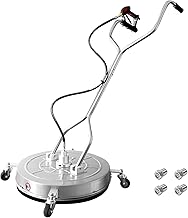
janz 24″ Pressure Washer Surface Cleaner with 4 Wheels,Dual Handle,Stainless Steel…
4.5★ (3,048 reviews)
At 24 inches, this cleaner runs slightly large for a 4 GPM machine — the article recommends 18–20 inches to match your flow rate — but the stainless housing and replaceable nozzles check the boxes the article says actually matter.
8. Personal Protective Equipment
This is the category people skip until something goes wrong.
- Eye protection: Chemical splash and debris are real risks. Wear it every job.
- Chemical-resistant gloves: Especially when mixing or handling sodium hypochlorite.
- Rubber boots: You’ll be standing in chemical runoff all day. Waterproof work boots at minimum; dedicated rubber boots if you’re doing heavy soft washing.
- Rain gear or Tyvek suit: For soft washing where overspray is heavy.
- Hearing protection: Gas engines are loud. Long days without ear protection add up.
Quick Comparison: Where to Spend vs. Where to Save
| Category | Spend More | Okay to Save |
|---|---|---|
| Pressure washer engine | Honda or Kohler — yes | No shortcuts here |
| Pump type | Triplex for daily use | Axial okay for part-time |
| Surface cleaner | Whisper Wash / Mosmatic | No — cheap ones show on the work |
| High-pressure hose | Wire wound, quality fittings | No on fittings; okay to buy generic hose from a reputable supplier |
| Nozzles/tips | Stainless steel orifice | Yes — buy bulk packs |
| Trailer | Eventually, enclosed | Open trailer is fine to start |
| PPE | Don’t skip it anywhere | No |
| Buffer tank | Add early | Used IBC tote is fine |
Recommended Gear

Affiliate Link
FIXFANS Pressure Washer Hose Reel, 300FT x 3/8″ Heavy Duty Hose Reel, Manual Crank…
4.3★ (1,296 reviews)
The article warns that cheap hoses blow fittings at the worst time — this 300-foot heavy-duty reel with wall, floor, or truck-mount options fits the “invest in your hoses” advice, though verify your machine clears 4,000 PSI before committing.
Don’t Forget the Business Side
Good equipment gets you to the job. What happens after — quoting, scheduling, collecting payment, following up — determines whether the business actually works.
Plenty of pressure washing operators run everything from a notebook or a group text. That works until it doesn’t. When you’re managing multiple crews, seasonal surges, or recurring maintenance contracts, you need a system.
Field service software like Jobber or Housecall Pro handles quotes, job scheduling, customer notifications, invoicing, and payment collection in one place. Both have tiers designed for small operations just starting out. Neither replaces good judgment on the job, but they do stop revenue from falling through the cracks.
The Short Version
If you’re starting from scratch and working backward from budget, here’s the order of priority:
- Reliable gas pressure washer with a triplex pump and Honda/Kohler engine
- Quality surface cleaner sized to your machine’s GPM
- Proper high-pressure hose — at least 100 feet — with quality fittings
- Downstream injector and basic chemical setup
- Buffer tank
- PPE — don’t skip or delay this
- Trailer setup that keeps your gear organized and protected
Buy right the first time on the things that touch every job — the machine, the pump, the surface cleaner, the hose. Cut corners there and you’re buying it twice.